Italy is convenient for travelling by car. The compact size of the regions, diverse landscapes, and well-developed road network allow you to plan a busy itinerary even for just a few days. Below is an overview of 10 destinations considered the most representative for getting to know the country.
1. Amalfi Coast
- Route: Salerno–Sorrento
- Length: about 50 km
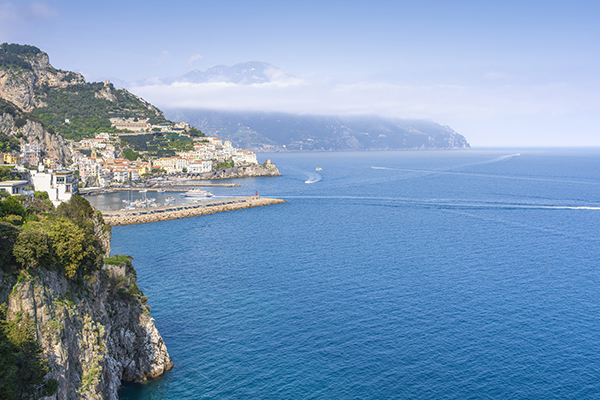
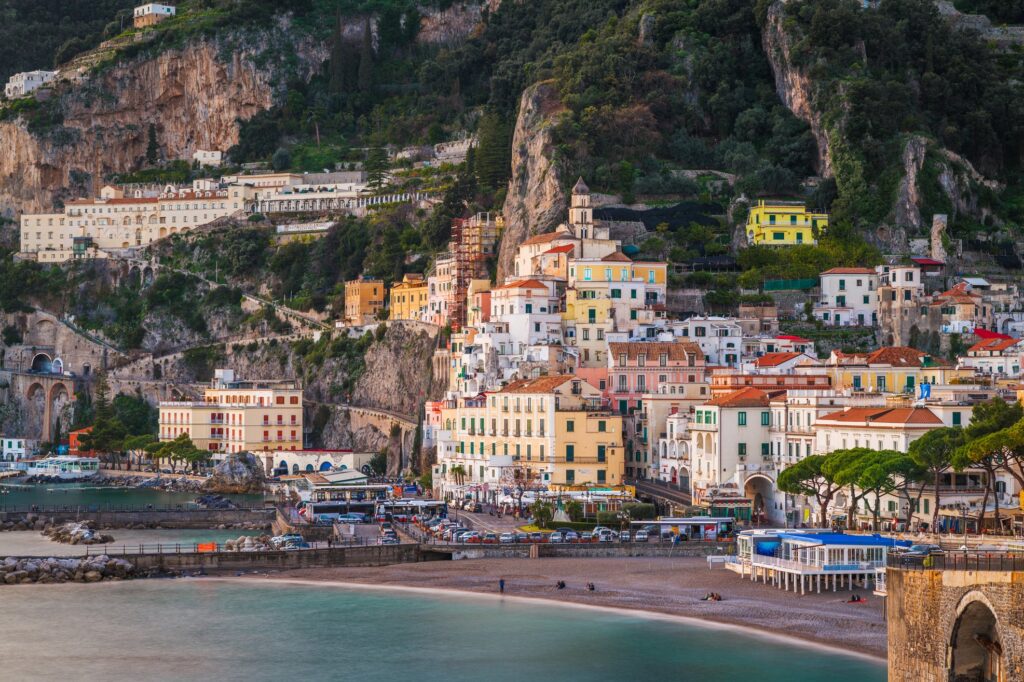
A trip along the Amalfi Coast remains one of the most recognizable car routes in the world. The narrow road, cliffs hanging over the sea, small towns literally carved into the relief, all this creates the feeling that the route exists only thanks to the persistence of engineers.
It is convenient to plan short stops along the way: there are many viewing platforms and restaurants that people visit specifically for the views. The route requires extra attention behind the wheel. Still, it is precisely because of its complexity that it is perceived as a unique experience rather than just a means of transportation.
2. Southern shore of Lake Como
- Route: Como–Lecco
- Length: about 65 km
Southern Como is a combination of calm water and mountain slopes reflected in the lake. The types of roads change here: straight sections give way to short climbs and turns. A visit to Villa Melzi d’Eril is usually a key stop on the route. The garden area is a great place to take a break, and the lake view is one of the most recognizable sights in Como.
3. Tuscany
- Route: Florence–Siena
- Length: about 70 km
This route is given as an example of a classic trip through central Italy. The landscape is characterized by alternating vineyards, rolling hills, and small towns. San Gimignano is found on almost all tourist routes, yet even with its high popularity, it retains its historical expressiveness.
The trip is well-suited for those who combine cultural stops with gastronomic ones: almost the entire region is one large wine-growing area. It is easy to vary the pace here: some people cover the route in a couple of hours, while others stretch it out over a whole day with tastings and walks.
4. Abruzzo
- Route: Rome–Pescara
- Length: about 150 km
Abruzzo is a region of contrasts. Just a few dozen kilometers after leaving Rome, the mountainous terrain begins, which defines the character of the trip.
The local national parks are among the most accessible for short stops. They offer many viewpoints, trails, and small family restaurants.
In one day, you can see both the high mountain areas and the coastal city of Pescara. The route is often recommended for a short weekend trip.
5. Sabina foothills
- Route: Rome–Sabina region
- Length: about 80 km
Sabina is a quiet rural area of Italy with minimal tourist traffic. Here, the route is built around small villages, the Marchigliani nature reserve, and olive oil production sites. Many travelers note that tastings and contact with local producers are the most memorable part of the trip. There are no difficult sections on the route, so it is suitable for those who prefer a smooth pace of travel.
6. From Milan to Bolzano
- Route: Milan–Bolzano
- Length: about 280 km
This is one of the most diverse routes in Northern Italy. It combines large cities such as Verona with more compact and specialized centers such as Cremona, famous for its violin-making tradition. Monza features Art Nouveau architecture, while Trento has elements of Austrian heritage.
As you head north, the landscape gradually changes. The Lombardy plain imperceptibly gives way to Alpine valleys. By the time you enter Bolzano, it becomes clear that culturally you are now closer to Central Europe than to the Mediterranean.
7. Rome Florence
- Route: Rome–Florence
- Length: about 280 km
This route is suitable for travelers who value practicality. It is a convenient route with good road surfaces and many attractions along the way. The most popular stops are Orvieto and Civita di Bagnoregio, where you can take a short walk or have lunch.
This is one of those cases where the road itself is not difficult, but allows you to supplement your trip with several interesting points of interest.
8. Sicily via the SS120
- Route: Catania–Randazzo
- Length: approx. 50 km
The SS120 runs along the northern slopes of Mount Etna, and it is the terrain that shapes the trip’s impression. Lava fields, alternating black and green areas, small settlements that have adapted to life near an active volcano, all this makes the route short but intense. The road surface is good, but weather conditions change quickly, which is essential to consider when planning.
9. Stelvio Pass
Route: Bormio–Prato allo Stelvio
Length: approx. 75 km
Stelvio is famous for its series of sharp turns. It is often mentioned in rankings of Europe’s most difficult roads. High bicycle traffic, elevation changes, and limited visibility all require caution but also attract those who appreciate technically interesting routes. The best time to travel is in the summer. Outside the season, the pass is closed due to snow.
10. Dolomites
- Route: Cortina d’Ampezzo–Bolzano
- Length: about 150 km
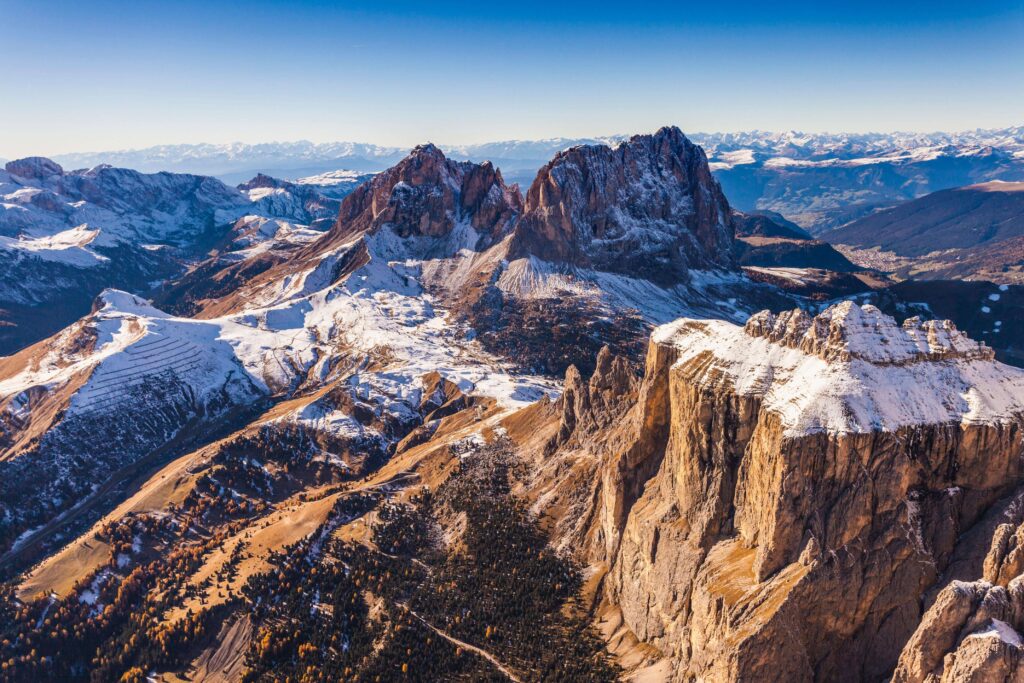
The Dolomites are an area where the landscape changes almost every few minutes. The route combines passes, lakes, and small mountain settlements. It is suitable for travelers who want to make frequent stops, as well as for those who prefer to move without long breaks.
This route is often recommended as a basic introduction to the Dolomites.
The roads await!
The variety of routes makes car travel in Italy a convenient way to explore the country. Each of the options listed offers its own pace, level of difficulty, and set of experiences. Due to the short distances and well-developed infrastructure, such trips are suitable for both short getaways and for planning a large-scale route across several regions.