The concept of the Seven Wonders of the World originated in ancient times, when the Greeks described the most impressive human-built structures. Only one of them has survived to this day, but interest in the others continues unabated; archaeological sites, museums, and ancient cities continue to attract researchers and tourists. Below, we examine each of the wonders and offer guidelines to help you plan your trip to these places.
1. The Great Pyramid of Giza
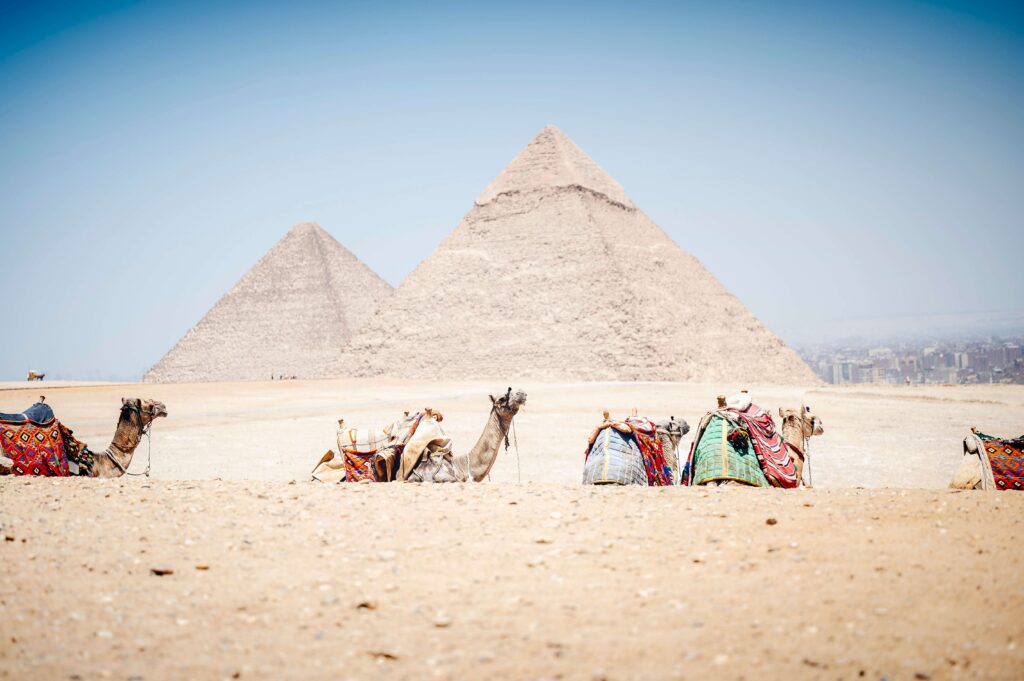
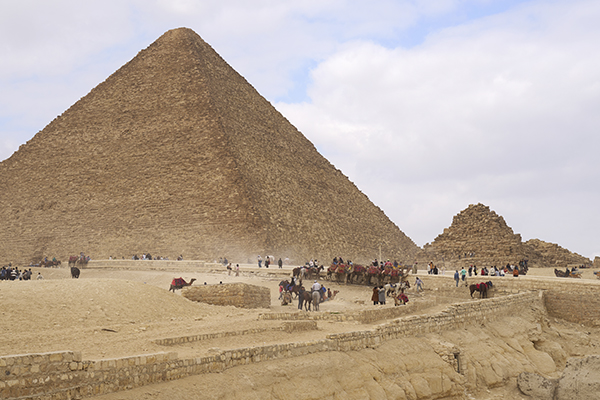
The Pyramid of Cheops remains the only surviving wonder of the ancient world. Built around 2560 BC, it demonstrates the precision of architectural calculations and organization of labor that still raises questions among experts. The pyramid once reached a height of 146 meters, and its scale is best felt when visiting the entire Giza Plateau: in addition to the pyramids of Cheops, Khafre, and Menkaure, the Great Sphinx is also located here.
Travel tip: It is most comfortable to visit the plateau during the winter months, when the heat is less intense. An experienced guide will help you understand how the necropolis’s functions changed and the theories about the construction of the pyramids.
2. The Hanging Gardens of Babylon
The Gardens of Babylon are the most mysterious of the wonders of the world. Ancient authors described cascading terraces with vegetation, the existence of which has not yet been confirmed archaeologically. Despite this, ancient Babylon is a real place, located near Hillah in modern-day Iraq. Here you can see reconstructions of the Ishtar Gate, the remains of palace complexes, and elements of the ancient street layout.
Travel tip: The region requires careful preparation, permits, and travel is only possible with local, licensed guides. Spring and autumn are considered the most suitable seasons due to the mild climate.
3. Statue of Zeus at Olympia
Created by the sculptor Phidias in the 5th century BC, the statue of Zeus once adorned the main temple of Olympia. The original has been lost, but works from Phidias’ workshop, temple reliefs, and details of ancient structures give an idea of the scale of this work.
Today, Olympia is a large archaeological complex that includes a stadium, the sanctuary of Hera, and a museum with finds from the excavations.
Travel tip: Visit Olympia in the morning or late afternoon, when there are fewer tourists and the sun is less intense. It is worth setting aside time for the museum, which houses items directly related to the temple complex.
4. Temple of Artemis in Ephesus
The sanctuary of Artemis, one of the most significant temple structures in the ancient world, was destroyed and rebuilt several times before finally disappearing. Today, its location is marked by several columns and foundations, but the historical value of Ephesus goes far beyond a single temple. The ancient city is one of the best-preserved in the region: streets, an amphitheater, the Library of Celsus, and residential buildings offer a glimpse of urban life in the Hellenistic era.
Travel tip: Seljuk is a convenient base. Come at opening time so you can explore Ephesus without crowds and intense heat.
5. Mausoleum at Halicarnassus
The burial complex of King Mausolus became a model of monumental architecture and gave the word “mausoleum” its name. The building was destroyed in the Middle Ages, but the materials and sculptures found a second life in the fortifications of Bodrum Castle. Modern Bodrum blends archaeological sites with resort infrastructure, so a trip here lets you combine a cultural program with relaxation.
Travel tip: St. Peter’s Castle has an underwater archaeology museum that displays finds from ships and elements of the mausoleum’s decor, a good complement to a walk around the city.
6. Colossus of Rhodes
The giant statue of the god Helios, erected after the Rhodians’ victory over their enemies, stood for just over half a century before being destroyed by an earthquake. The exact location of the statue is unknown. Still, the city of Rhodes remains an important historical center: its mighty fortress walls, medieval town, and ancient ruins allow visitors to trace the island’s development through the different eras.
Travel tip: the old town of Rhodes is listed as a UNESCO World Heritage Site; a walk through its streets helps you see why the island has always occupied a key position in the Aegean Sea. Beaches and coastal routes can be included in the program for the next day.
7. Lighthouse of Alexandria
The lighthouse on the island of Pharos served as a landmark for sailors for almost 1,500 years, until a series of catastrophic earthquakes destroyed it. Today, its stones lie partly on the seabed, and the area of ancient Alexandria offers other points of interest: Qaitbay Fortress, the Roman amphitheater, the Bibliotheca Alexandrina, and museum collections dedicated to the city’s history.
Travel tip: The Alexandria Museum provides a systematic overview of ancient finds, including objects recovered from the seabed near the former lighthouse. A walk along the Corniche is a good way to finish off your tour of the key sites.
A Journey Through History
A trip to the footsteps of the seven ancient wonders of the world is an opportunity to see how architectural thought developed and which cultural centers shaped the development of civilizations. Only one wonder has been preserved in its entirety. Still, the routes to each of them offer views of important archaeological sites, museums, and cities that have played a key role in the history of the Mediterranean and the Middle East. These places are united not so much by the grandeur of the lost structures as by the opportunity to touch the heritage that continues to influence contemporary culture. Such a route is not retrospective, but a journey that helps to understand the origins of world architecture and the history of communication between peoples.